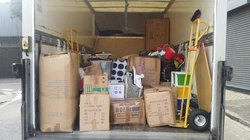
Canary Wharf London Removals: Navigating Docklands Access
Moving into or out of Canary Wharf sounds straightforward until you meet the reality of Docklands access. Tower blocks, loading bays, concierge rules, timed lift bookings, tight underground parking, and busy roads can turn a simple relocation into a very careful operation. The good news? With the right plan, Canary Wharf London removals can be efficient, calm, and far less disruptive than people expect.
This guide breaks down how removals work in the Canary Wharf area, why access planning matters so much, and what to do before moving day so you do not get caught out by a missed slot, an oversized van, or a lift that was booked for the wrong hour. If you are moving a flat, a penthouse, or a workplace in Docklands, a little local know-how goes a long way.
To make the whole process easier to compare, plan, and book, you will also find practical service links throughout this article, including options such as removals, man and van, house removals, and office removals.
Table of Contents
- Why Canary Wharf London Removals: Navigating Docklands Access Matters
- How Canary Wharf London Removals: Navigating Docklands Access Works
- Key Benefits and Practical Advantages
- Who This Is For and When It Makes Sense
- Step-by-Step Guidance
- Expert Tips for Better Results
- Common Mistakes to Avoid
- Tools, Resources and Recommendations
- Law, Compliance, Standards, or Best Practice
- Options, Methods, or Comparison Table
- Case Study or Real-World Example
- Practical Checklist
- Conclusion
- Frequently Asked Questions
Why Canary Wharf London Removals: Navigating Docklands Access Matters
Canary Wharf is a very different moving environment from a typical terraced street in outer London. The area was built for commercial efficiency, modern living, and high footfall. That is brilliant for office life and apartment living, but it means removals need more than a van and a pair of hands. They need timing, permissions, building coordination, and a driver who understands Docklands access properly.
In practice, the challenges often begin before the first box is touched. You may need to book a service lift, give advance notice to building management, register vehicle details, or work around restricted loading points. Some buildings also expect proof of insurance or a named contact on the day. None of this is unusual. It is just part of the area.
That is why many people use a specialist removal company rather than trying to piece the move together themselves. In a place like Canary Wharf, the right team is not simply moving items; they are coordinating a sequence of access decisions that can save hours.
There is also the human side of it. If you have ever watched a lift lobby fill with boxes at 8:30 a.m. while a concierge tries to juggle residents, deliveries, and a cleaner's trolley, you will know how quickly small delays snowball. A good plan protects everyone involved, not just your schedule.
How Canary Wharf London Removals: Navigating Docklands Access Works
The process usually starts with a property check and a conversation about access. A moving team will want to know the building name, floor level, lift availability, closest vehicle point, and whether the route includes any barriers, bollards, or underground entrances. If it is an office relocation, they may also need details on loading dock windows, IT equipment handling, and building management procedures.
For smaller jobs, a man with van or man and van service can be a smart fit, especially if you are moving one bedroom, a studio, or a few bulky pieces. For larger home moves or structured apartment relocations, a full team of house removalists or house movers is usually the better choice.
Docklands access often affects three things at once:
- Vehicle choice: whether a small van, removal van, or larger truck can physically reach the property.
- Scheduling: when lifts, loading bays, and building teams are available.
- Handling plan: how far items need to be carried from vehicle to flat or office.
On the day, the team will normally park as close as possible to the agreed access point, unload in an organised sequence, and move goods through the building under the agreed time window. For many residents, the difference between a smooth move and a stressful one is simply whether the team has already mapped this out.
If you need packing support too, it can make sense to combine access planning with packing and unpacking services. Truth be told, that is often what takes the pressure off most people. The boxes are one thing. The logistics are another.
Key Benefits and Practical Advantages
When Docklands access is handled well, the benefits are very real. You get less waiting, fewer damaged items, and a move that feels controlled instead of chaotic. That matters even more in Canary Wharf because one small issue can affect a lift booking, a parking permit, or a building slot for the next resident.
Here are the main advantages of a well-planned removal:
- Fewer delays: pre-booked access means the team is not standing around while permissions are sorted out.
- Less risk of damage: fewer corridor bottlenecks and less unnecessary handling.
- Better building compliance: you reduce the chance of upsetting concierge teams or breaching move-in rules.
- More efficient labour: movers can work directly, not improvise around access problems.
- Cleaner handover: especially useful for office relocations with tight occupancy deadlines.
There is also a financial upside, although it is fair to be cautious here because every move is different. A well-prepared job usually avoids wasted time, and wasted time is what often drives cost up. That is one reason people request pricing and quotes early, before access issues become last-minute surprises.
For commercial occupiers in the Wharf, access planning can be the difference between a half-day move and a much longer one. For homeowners, it can mean a peaceful evening rather than spending the night hunting for a missing lamp shade and wondering why the sofa is still downstairs. Not ideal, obviously.
Who This Is For and When It Makes Sense
This kind of access-led removal planning is especially useful if you are:
- moving into a Canary Wharf apartment block with concierge-controlled entry;
- leaving a high-rise flat with a service lift booking;
- relocating an office or satellite workspace in Docklands;
- moving bulky furniture through managed access routes;
- balancing a home move with strict time slots or local parking restrictions;
- needing a short-notice or same-day style solution for a smaller load.
If your move is mostly personal belongings and you have a limited volume, a smaller service such as removals van or man and van removals may be enough. If the move includes furniture, archive boxes, office equipment, or multiple rooms, then a larger crew or vehicle is often the safer fit.
It also makes sense to think about your destination, not just Canary Wharf itself. A move from or to nearby areas such as Docklands, Poplar, Stratford, or Greenwich may involve very different access patterns, even if the distance looks tiny on a map.
That is a funny thing about London moves: two places can be a few miles apart and feel like entirely different jobs.
Step-by-Step Guidance
A successful Canary Wharf move usually follows a very practical sequence. You do not need to overcomplicate it, but you do need to be organised. Here is the simplest way to approach it.
- Confirm the building rules. Ask whether there are move-in or move-out restrictions, lift bookings, deposits, or mandatory arrival windows.
- Measure the key access points. Check lift size, corridor width, stair turns, and any external steps or ramps. If a wardrobe fits at home but not in the lift, that becomes a very real problem very quickly.
- Choose the right vehicle. A larger van is not always better if access is tight. Sometimes a smaller moving van or removal van is the smarter choice.
- Book the timing early. In Docklands, access slots matter. Aim to align the vehicle arrival with lift availability and concierge approval.
- Label and stage everything. Put the most important boxes first, and keep essentials separate so they do not disappear into the main load.
- Prepare proof and paperwork. Some buildings ask for insurance details, move notifications, or vehicle registrations. Keep those handy.
- Build in margin. If the plan says 60 minutes, assume you may need 90. That small buffer helps you stay calm when a lift is shared or a delivery is in the way.
One small but valuable habit: walk the route from the building door to the vehicle before move day, if you can. Even a quick look can reveal a security gate, a narrow corner, or a strange loading setup that the floor plan never showed. That little five-minute check saves a lot of head scratching later.
If you are moving a workplace, you may want to pair the logistics with commercial moves or office relocation services. For homes, a dedicated home moves approach is usually more suitable than treating the job like a general collection.
Expert Tips for Better Results
In our experience, the moves that go smoothly are rarely the ones with the fanciest equipment. They are the ones with the best preparation. A few small decisions can make a huge difference.
- Keep a single point of contact. One person should manage building messages, mover updates, and access approval. Otherwise people start assuming someone else sorted it. They usually haven't.
- Use colour-coded labels. For high-rise moves, colour helps more than long written notes. Blue for kitchen, green for office, red for fragile.
- Reserve a small essentials bag. Keys, chargers, medication, kettle, documents, and one change of clothes. Nothing glamorous, just useful.
- Confirm parking the day before. Canary Wharf and Docklands are not places to improvise with a random double yellow and a hopeful attitude.
- Protect furniture edges early. Lifts and tight corridors are unforgiving on corners.
- Ask about dismantling. Bed frames, desks, and wardrobes may be easier to move in sections.
A practical tip that gets overlooked: keep the heaviest boxes small. A box full of books may look tidy, but at the top of a tower block it becomes a back-breaking mistake. Better to spread weight out sensibly.
Another small win is to schedule your move outside the obvious rush moments whenever possible. Early access can help, but not if the concierge desk is closed or the loading bay is already queued. Sounds obvious, yet it catches people out all the time.
Common Mistakes to Avoid
Most Docklands moving problems are preventable. They happen because people underestimate how managed the area really is.
- Booking the wrong vehicle size: too large and it cannot access the building; too small and the move becomes inefficient.
- Skipping building approval: some properties require notice well in advance.
- Forgetting lift restrictions: shared or service lifts may only be available at set times.
- Assuming roadside parking will be easy: in Canary Wharf, that can be a risky assumption.
- Packing late: last-minute boxes always take longer than expected.
- Not separating fragile or urgent items: you do not want to search through twenty boxes for the Wi-Fi router.
- Leaving insurance questions until the day of the move: it is better to confirm in advance through a service like insurance and safety.
One of the most common mistakes is focusing only on moving out. But if you are moving into a managed building, the destination rules matter just as much. The building you are arriving at may have a different lift procedure, different loading bay access, or a concierge team that wants notice before the van appears. Worth checking twice.
Tools, Resources and Recommendations
You do not need a huge toolkit, but a sensible set of moving aids can save a lot of time and strain. For Docklands moves, the most useful things are often quite ordinary.
- sturdy moving boxes and tape;
- furniture blankets and corner protectors;
- trolley or sack truck for heavier loads;
- labels or marker pens for fast room sorting;
- phone photos of building instructions and lift booking confirmations;
- a printed contact sheet for concierge, movers, and the new address.
If you are clearing out a flat or dealing with a few extra pieces, furniture pick up can be useful for items that do not need to come with you. That can make the move lighter, faster, and less cluttered.
For larger jobs, it may also be worth reviewing removal services, removal companies, and removals near me so you can compare the kind of support each one offers. Some teams are ideal for simple loading and transport. Others cover packing, dismantling, and building coordination as well.
If you prefer a straightforward enquiry path, the site's contact page is the sensible place to start, especially if you have unusual access conditions or need a fast response.
Law, Compliance, Standards, or Best Practice
For moves in Canary Wharf and Docklands, the key compliance issues are usually practical rather than complicated. Building rules, parking permissions, health and safety duties, and insurance checks matter more than anything flashy. You are not generally dealing with a single "Docklands moving law"; you are dealing with a mix of landlord requirements, local access restrictions, and standard UK moving best practice.
Best practice usually includes the following:
- confirming access instructions before arrival;
- using insured vehicles and trained handlers;
- protecting common areas from damage;
- respecting concierge guidance and time windows;
- keeping walkways clear while loading;
- staying within safe lifting limits and using trolleys where needed.
For responsible operators, pages such as health and safety policy, recycling and sustainability, payment and security, and about us help show how the service is run behind the scenes. That matters more than many people realise. A move is physical work, but it is also a trust exercise.
If you are comparing providers, look for plain answers on access, insurance, and what happens if the building changes the rules at the last minute. If the response is vague, that is worth noticing.
Options, Methods, or Comparison Table
Different moving methods suit different Canary Wharf situations. A concise comparison can help you pick the right route without overbuying or underplanning.
| Service type | Best for | Why it works in Docklands | Watch out for |
|---|---|---|---|
| Man and van | Small flats, a few items, quick local moves | Flexible for tight access and shorter loading windows | May be limited for larger furniture or multi-trip jobs |
| Removal van | Medium-sized home moves | Good balance of capacity and urban manoeuvrability | Needs correct parking and lift timing |
| Full removals team | Whole-home or complex apartment moves | Better for heavy furniture, multiple rooms, and coordination | Costs more, but usually saves time and hassle |
| Office relocation service | Desks, IT, files, and business equipment | Helps reduce downtime and manage building procedures | Needs careful planning with facilities teams |
If you are not sure what level of service you need, start with the volume of items, the access restrictions, and your deadline. Then work backwards. That approach is far less stressful than guessing on price alone.
For some customers, a moving truck or removal truck hire makes sense. For others, especially in managed blocks, the simplest vehicle that can do the job is often the best one.
Case Study or Real-World Example
Picture a couple moving from a two-bedroom apartment near Canary Wharf into a new place across Docklands. The flat is on the 14th floor. The building only allows move-ins between 10 a.m. and 2 p.m., and the service lift must be booked through the concierge. On paper, the job looks like a standard London removal. In reality, it has a lot of moving parts.
They start by checking lift dimensions and confirming whether their wardrobe can travel upright. It cannot. So it is dismantled. The movers also confirm that the van should use a side access point rather than trying to stop at the front entrance, where public traffic is heavier. Boxes are colour-labelled the night before, and the essentials bag is kept separate. Nothing dramatic. Just smart.
On the day, the vehicle arrives slightly early, but not too early, so the team is ready when the concierge opens the slot. The loading bay is already in use for a delivery, so the mover keeps the van positioned for a quick handoff rather than idling in the wrong place. The lift runs steadily, the hallway remains clear, and the whole job finishes more calmly than expected.
That is what good Docklands access planning looks like. Not perfect. Not theatrical. Just controlled.
For a local move like that, many people would compare Canary Wharf with nearby areas like Docklands, and then choose the most suitable service level based on building rules rather than postcode alone.
Practical Checklist
Use this checklist before moving day. It keeps things simple, which is usually the best approach in a place like Canary Wharf.
- Confirm the move date and time window with the building.
- Book lift access or service lift reservations.
- Check whether the concierge needs vehicle details.
- Measure key furniture against lift and corridor space.
- Choose the right vehicle size for the job.
- Ask about parking, loading bays, and waiting restrictions.
- Separate fragile items and essentials.
- Use clear labels for each room or department.
- Keep insurance and contact information available.
- Review whether any items should be recycled, sold, or donated before the move.
- Build in a small time buffer for access delays.
A well-run Docklands move is usually invisible to everyone except the people doing it. That is actually the point.
Conclusion
Canary Wharf London removals are not difficult because the area is impossible. They are difficult because the access rules are real, detailed, and easy to overlook. Once you plan around the building, the vehicle, the time slot, and the route in and out, the whole thing becomes much more manageable.
Whether you are moving a studio, a family flat, or an office suite, the winning formula is the same: confirm access early, choose the right service, keep your paperwork in order, and work with a team that understands Docklands instead of guessing at it. That small bit of local awareness can save you a lot of stress, and honestly, a lot of time too.
If you are still deciding between a smaller crew, a full removal team, or a more flexible vehicle option, take a moment to compare the service pages, ask clear questions, and get a quote that reflects the actual access conditions. That is the sensible next step.
Get a free quote today and see how much you can save.
And if you are moving soon, take a breath. With a good plan, even a tricky Docklands move can feel surprisingly straightforward.
Frequently Asked Questions
What makes Canary Wharf removals different from a normal London move?
The main difference is access. Canary Wharf often involves managed buildings, lift bookings, loading windows, concierge checks, and tighter vehicle rules than a standard street-level move.
Do I need to book the lift before my moving company arrives?
Usually, yes. In many Docklands buildings, lift access must be reserved in advance, and the mover needs to arrive during that slot or the move can stall quickly.
Is a man and van service enough for a Canary Wharf flat?
It can be, especially for smaller flats or light loads. But if you have larger furniture, multiple rooms, or strict timing, a fuller removals service is often more practical.
How do I know what size van I need?
Think about item volume, furniture size, and building access. A van that is too large can actually be a problem in managed Docklands areas, so access matters as much as capacity.
What should I ask my building management before moving day?
Ask about lift reservations, loading bay use, parking arrangements, move-in rules, insurance requirements, and whether the concierge needs advance notice of vehicle details.
Can office moves in Canary Wharf be done outside working hours?
Sometimes, yes, but it depends on the building and the landlord. Many office relocations need coordination around security, access windows, and building management approval.
How far in advance should I book a Canary Wharf removal?
As early as you can, especially if the move involves a high-rise building, a large team, or a specific time slot. More notice usually means fewer access problems.
What if the loading bay is occupied on the day?
That is exactly why a buffer is useful. A good mover will adapt, but it may mean a short delay, a different stopping point, or a revised handball route.
Are there special insurance concerns for Docklands moves?
The usual concerns are public liability, goods in transit, and making sure the operator is covered for the type of work they are doing. It is worth checking this before booking.
Can I move furniture that does not fit in the lift?
Sometimes it can be dismantled and moved in sections. In other cases, the item may need a different route or a different service altogether. Measuring early avoids a nasty surprise.
What is the best way to reduce stress on moving day?
Label boxes clearly, book access early, keep essentials separate, and choose a mover who understands Canary Wharf access. Small preparations make a big difference.
Do you offer help with packing as well as transport?
Yes, packing support can be combined with moving in many cases, and it is often helpful for busy households or offices that do not have time to organise every box themselves.
What if I only need to move a few items from Canary Wharf?
For smaller jobs, a flexible service such as man with van removals may be a better fit than a full-scale move. It is quicker to book and usually easier to match to your load size.
Can I get a quote without knowing every access detail yet?
Yes, but the more detail you provide about the building, the lift, parking, and item volume, the more accurate the quote will be. Partial information can still help you start the process.